Promo Pathways in Pocket Formats: Tracing Activation Flows Through App-Based Reward Systems
Kai Simmons · Jul 1, 2026
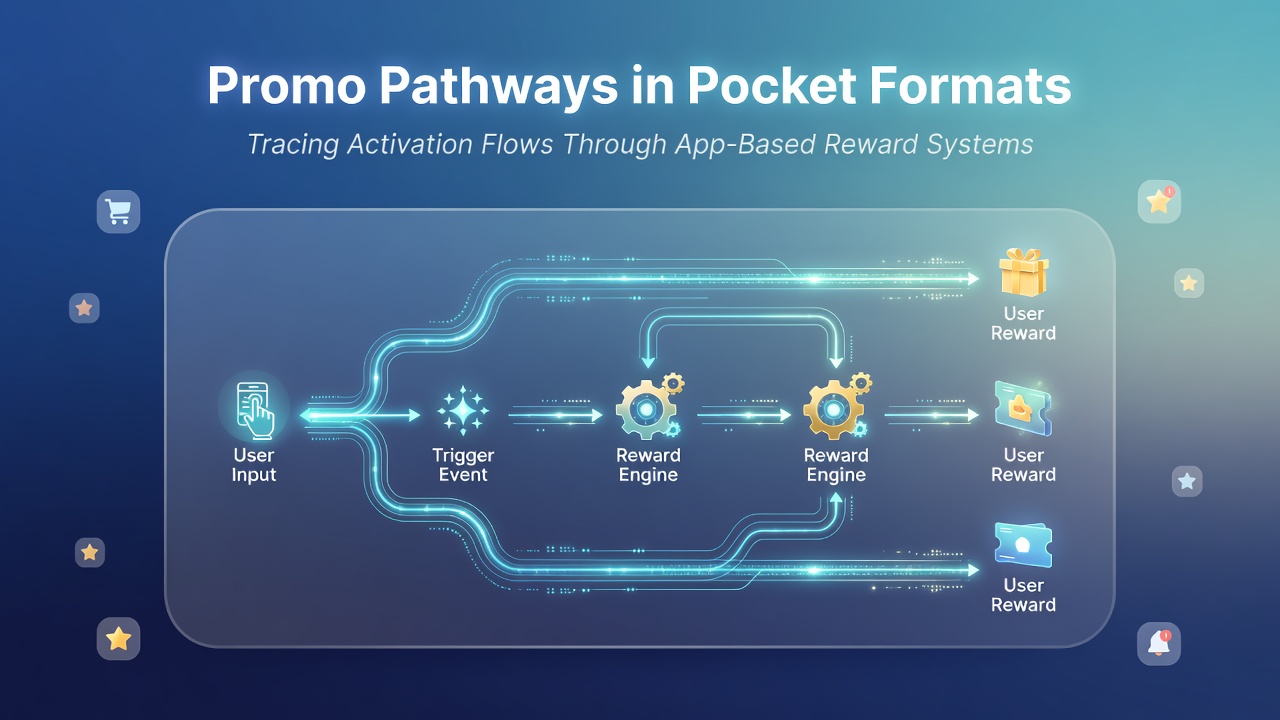
Promo Pathways in Pocket Formats: Tracing Activation Flows Through App-Based Reward Systems
App-based reward systems have become central to how companies engage users across retail, hospitality, and service sectors, and tracing the activation flows reveals a network of triggers that move promotions from offer to redemption. These pocket-format pathways rely on device-level interactions that convert user actions into points, credits, or unlocks without requiring separate web portals.
Core Components of Mobile Reward Activation
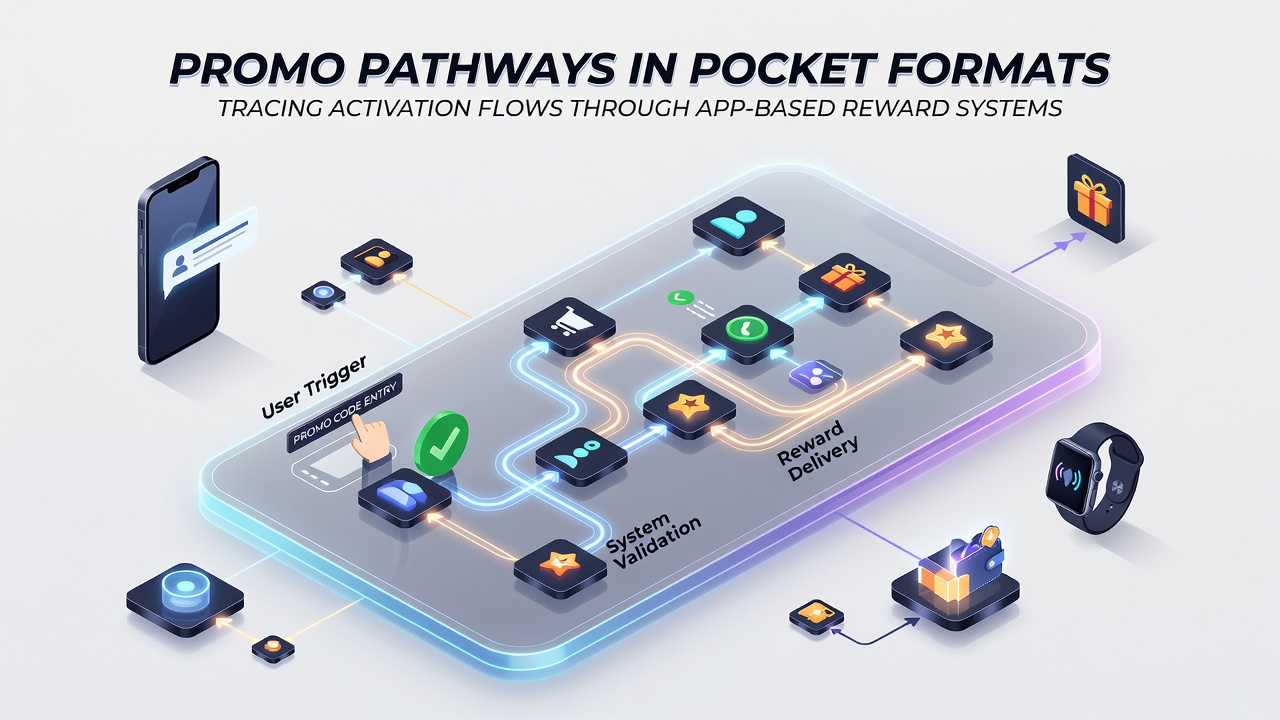
Activation begins when an app registers a qualifying event such as a purchase scan, location check-in, or task completion, after which the system routes the data through backend servers that apply predefined rules. Developers embed these rules in SDKs that communicate with cloud platforms, ensuring the flow stays within the app environment and maintains session continuity across multiple device states.
Push notifications serve as the first external prompt in many sequences, delivering a unique code or deep link that launches the app directly to the reward interface. Once inside, the app confirms eligibility by cross-referencing stored user profiles against campaign parameters, a step that prevents duplicate claims and enforces regional or time-based restrictions.
Data Pathways and Integration Points
Behind each tap lies a sequence of API calls that log the activation timestamp, device identifier, and transaction value, feeding this information into loyalty engines that update balances in real time. Integration with payment processors allows instant application of discounts or point multipliers at checkout, while separate hooks connect to inventory systems so physical rewards remain synchronized with digital claims.
Research from the Pew Research Center shows that 78 percent of smartphone users interact with at least one rewards app weekly, creating consistent data streams that companies analyze for pattern refinement. These streams pass through secure encryption layers before reaching analytics dashboards that measure conversion rates at each stage of the pathway.
Tracing a Typical User Journey
A user opens a grocery app after receiving a targeted notification about a weekend multiplier, selects items that qualify under the current campaign, and completes payment through the integrated wallet. The system then issues points within seconds, displays an updated progress bar toward the next tier, and optionally triggers a follow-up offer based on basket composition. Observers note that this entire cycle completes in under thirty seconds on most modern handsets because the logic executes locally before syncing with remote servers.
July 2026 figures from industry tracking indicate that apps incorporating geofenced triggers saw activation rates rise by 34 percent compared with non-location campaigns, highlighting how contextual signals tighten the pathway between intent and reward delivery. Developers adjust these triggers by testing radius sizes and dwell times to balance relevance against battery impact.
Security and Compliance Layers
Every activation flow incorporates fraud-detection modules that flag anomalous patterns such as rapid successive claims from teh same device or mismatched GPS coordinates. When anomalies appear, the pathway diverts to manual review queues or temporary holds while the core transaction continues uninterrupted for legitimate users.
Regulatory frameworks in multiple jurisdictions require transparent disclosure of data handling within these flows, prompting developers to surface consent screens at key junctions. The European Commission’s 2025 digital services report documented that apps displaying clear data-flow diagrams achieved higher user retention, because participants understood exactly where their interaction data traveled after each reward claim.
Cross-Platform and Offline Considerations
Activation pathways adapt when connectivity drops by queuing transactions locally and reconciling them once the device regains signal, a technique that preserves user momentum. Hybrid apps further unify experiences across operating systems by sharing the same backend rule sets while respecting platform-specific notification centers and biometric prompts.
Studies published by the University of Melbourne’s Centre for Digital Transformation in 2026 revealed that offline-capable reward modules reduced abandoned claims by 22 percent in regions with intermittent network coverage. Those findings prompted several major retailers to embed lightweight rule engines directly into their mobile codebases rather than relying solely on live API responses.
Conclusion
Promo pathways in pocket formats continue to evolve as device capabilities expand and data exchange protocols mature. Mapping each activation flow from notification to redemption provides companies with precise levers for improving conversion while maintaining security and regulatory alignment across diverse markets.